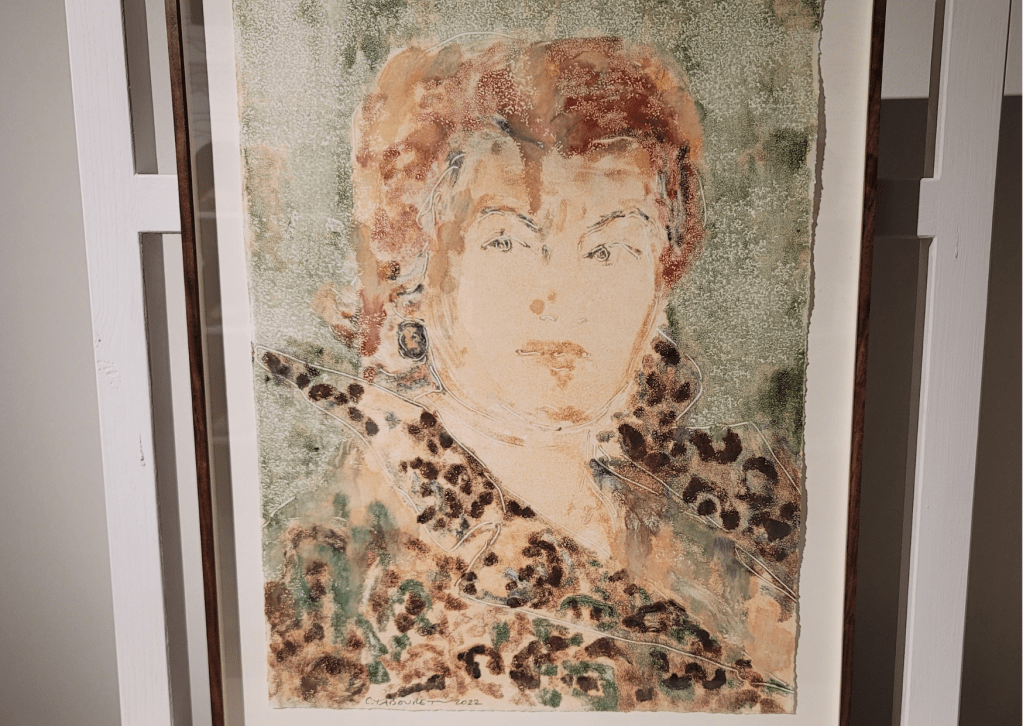
Wanda Ferragamo was a wife of an Italian fashion designer Salvatore Ferragamo, who was known for his innovative designs and contributions to the footwear industry. Wanda played a key role in expanding and maintaining the Ferragamo brand’s success after her husband’s death. She was instrumental in the establishment of Museo Salvatore Ferragamo, the museum dedicated to the late work of her husband.
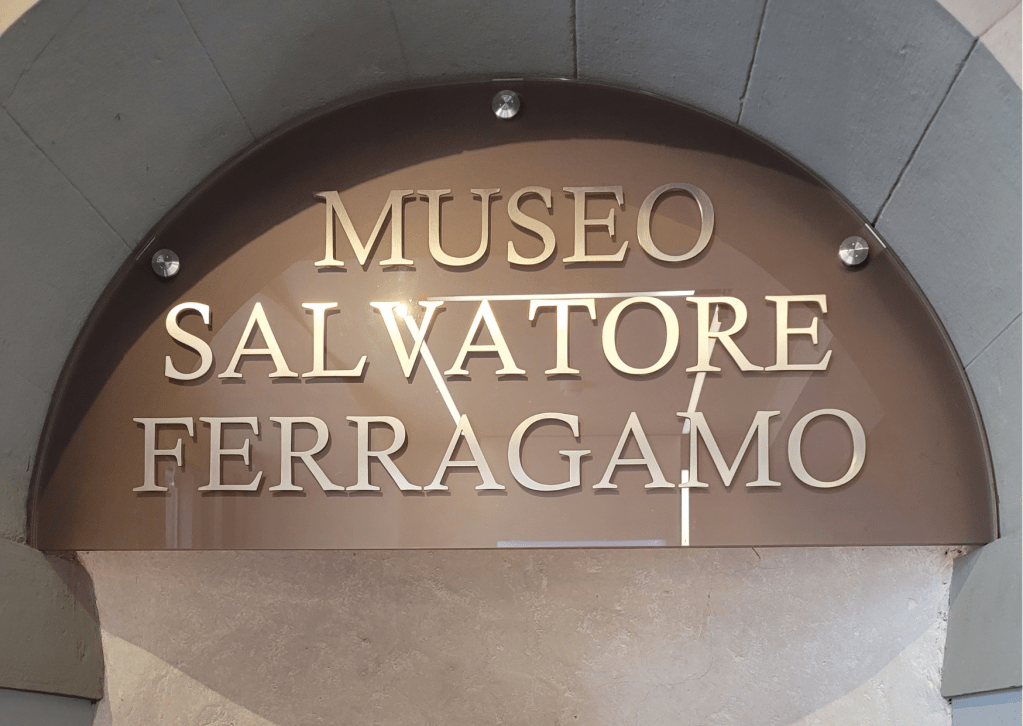
Museo Salvatore Ferragamo was established in 1995 in Florence, Italy as a tribute to Wanda Miletti Ferragamo, who for sixty years helmed the company that bears the name of her husband, Salvatore Ferragamo. Female talent has characterized the brand from the end of the 1950’s, when the creative departments were led by their eldest daughter Fiamma and fifteen-year-old Giovanna, thus a significant presence of women was being established in the company. When Salvatore died prematurely on August 7, 1960, his wife Wanda took up his legacy, seeking to establish a balance between her commitment to the company and the care of her family and children.
Respecting Wanda’s reluctance to talk about herself, the exhibition tells, mostly, of other Italian women who lived during years of major changes in Italy between 1955-1965, and engaged in the construction of a society that was different from the historical context from which they came. Women who were active in the professional, cultural and scientific fields, who forged both their sensibility and identity to interpret a rapidly transforming present, while at the same time striving to reconcile feelings, desires, and work.
“I firmly believe that a woman should have a job to which she can devote her energies. This is why I have encouraged my daughters to follow a work path. All women work, it’s just that some do this outside the home. Housewives have to keep the books like an accountant, decorate like an interior designer, cook like a chef, organize the home like a CEO, and all this while being a wife and mom. We women do everything, no matter what or where our office is”
Wanda Ferragamo

Wanda Miletti Ferragamowas born on December 18,1921 at Bonito, a village in Irpinia that was also her husband’s birthplace. Wanda’s father was a physician, her mother came from a family of wealthy landowners. From her mother, she inherited a passion for cooking – as it’s evident from her notebook containing over two hundred recipes. In the summer of 1940 she met Salvatore, who had come to Bonito to visit her father.
The shoemaker of the stars was already a celebrity, whom young Wanda welcomed by congratulating him on his contribution to female elegance. Struck by her words, Salvatore decided that she would be his wife, despite the difference in their ages. Wanda was not yet nineteen, Salvatore was forty-two. The very next day her a bouquet of tuberoses, then made her a stunning pair of shoes with fishscale uppers. On November 9, 1940 they were married in Naples and, after their honeymoon, the couple moved to Salvatore’s villa amidst the Florentine hills.
Family life proceeded peacefully, brightened by the birth of six children, Fiamma, Giovanna, Ferruccio, Fulvia, Leonardo, and Massimo – until 1958, when Salvatore became ill, passing away on August 7, 1960. Wanda was not yet forty and she had never worked before. Nonetheless, she decided to assume the leadership of the company and to combine this new aspect of her life with looking after the children, some of whom were still very young.
Driven by the energy of love, she chose to carry on her husband’s project and to honor his memory: the idea was to turn a handcrafted women’s footwear workshop into a fashion house, where their children could continue to walk the path of dedication, innovation and creativity that Salvatore had forged so many years earlier.
Under her leadership, the Ferragamo company was not only strengthened, but also became an international empire. Wanda never flaunted her achievements her three honorary degrees, her career awards, and many international honors and titles. The credit for the results obtained always had to be given to others: her husband, her children, her collaborators.
Wanda entrusted to this Museum, founded in 1995, and the Fondazione Ferragamo, set up in 2013, the important task of nurturing the memory of an entrepreneurial story founded on primarily moral, rather than economic, values to be passed on to future generations.
ITALIAN HOMES
The Ferragamo museum exhibition layout created by scenographer Maurizio Balò is inspired by the domestic space of a middle-class family during the time of the economic boom in Italy, represented by a dolls’ house. Back in the 1950s and 1960s, interior design in Italian homes geared towards female subjectivity, the taste of “the lady of the house”, and her creativity. The themes of the sections evoke the characteristics spaces of this ideal home: the dining room, library, attic, kitchen, living room, girl’s room, and wardrobe.
The only out-of-context section is the introductory room: an evocative reconstruction of Wanda Ferragamo’s office overlooking Piazza Santa Trinita. The furniture and other details are rendered in line drawings, like the views of Italian cities that decorate the carriages of the Settebello express train – a veritable icon of Italy at the time of the economic boom – which presents a new idea of the country.


Photo: Icetime Luxe Creatives
“A house reflects the people who live in it, the love you put into things. The house is like a person. If you don’t show discipline and love, everything falls apart”
Wanda Ferragamo
In the 1950s and 1960s, advertising leverages lifestyles geared to educating consumers to purchase new and different products targeted mainly to women and home care.
The pages of magazines, like the commercials broadcast by the popular television program Carosello, launched in 1957, present the new family circle as a self-referential universe in which to develop new habits that set the rhythm of everyday life and the level of financial status: a pioneering emotional marketing tool that offers the consumer a domestic life inspired by middle-class urban models.

Photo: Icetime Luxe Creatives
THE HOME IS THE WOMAN’S KINGDOM AND THE KITCHEN ITS CAPITAL
The kitchen is now the stage on which a new kind of housewife performs, with a fashionable hairstyle and clothes, self-assurance, and pride in her capacity to skillfully manage the complicated household. The large and small domestic appliances that serve her purpose are housed in an American-style modular furniture arrangement, in which the refrigerator appears: the first appliance to enter homes because it permits a considerable saving on foodstuffs, thanks to their orderly storage in small compartments.
A new landscape of forms is designed in this space, made up of ceramic objects whose bright colors are echoed in those of others manufactured from a new material: plastic for food and everyday use. The kitchen is not only a room in the house, but also gastronomic know-how through which to express acquired knowledge. Wanda Ferragamo’s recipe book, the centerpiece of this section, evokes the strength of traditional family and local cooking, always accompanied by tidbits discovered on her travels or through social relationships. A fruitful combination and mirror of a changing world.
ITALIAN FAMILIES
Between 1955 and 1965 the Italian family changes radically, due to the abandonment of rural areas, migrations and urbanization. These factors break up the network of past parental and social relationships, basically reducing family units to an average of four members: the parents and two children (the nuclear family). Everyday family life becomes a workshop for intergenerational and intergender relationships in the process of redefinition, which is not confined to the decade in question, but raises questions concerning our present. The home movies, along with the newscasts and advertising, present a picture of Italy at the time. These screenings focus on the image of women, mostly middle-class, who assume, also through the way they dress, new and unusual attitudes, like smoking or claiming that playing with one’s children is not a “priority”: signs that suggest change both in Italian society and female identities. By contrast, the newsreel footage of famous families, like the British royals, evokes an ideal, stereotype image of family units and the relationships established between their members.
“I had never worked before in my life. Until then I had taken care of the house and the children, which was as far as women’s education went in my day. Now there was only one head of the family and the company: me. The challenge was to find a balance between the responsibility of raising the children and my new role in the business. I tried to concentrate on a new product line, while having to respond to the requests of my six children. How would I like to be remembered? As a mother, a mother in the service of entrepreneurship”
Wanda Ferragamo

Photo: Icetime Luxe Creatives
ITALIAN FASHION REVOLUTION
In 1955 Italian fashion establishes itself abroad and apparel is undergoing a transformation that will lead to the creation of a new industry sector: ready-to-wear, designed by an emerging professional figure, the fashion designer. In the world of fashion women play leading roles as dressmakers, journalists, and jewelry designers but are also the main targets of magazines and photography.
Over the years, clothing shapes become less constricting, taking the form of the sack dress and trapeze line, as well as loose coats and tailored suits. There is a growing interest in knitwear and pants; pumps and sandals with stiletto heels gradually give way to medium heels and flats. Fashion responds to the new identity of a women who travels, takes the subway, and works, and, in every field, takes care of her body and wants to be elegant, wherever she is.

Photo: Icetime Luxe Creatives
“I urge you to study, to understand, and to read to enrich yourselves with ideas and concepts. Culture and art will enable you to comprehend and overcome the many difficult moments in life.”
Wanda Ferragamo
From 1960 until her death on 19 October 2018, Wanda Miletti Ferragamo was the head of the Salvatore Ferragamo brand, constantly seeking a balance between her work and family. In August 1960, when her husbband died, instead of closing the business, she decided to transform an artisanal workshop for women’s shoes into a fashion house, where her children could continue the tradition of innovation and creativity that Salvatore had begun.
Wanda Ferragamo did not like to talk about herself or boast of her success. This is why the goal of the museum is to honors her memory with an exhibition that examines the complexities of what it was to be a woman in Italy between the fifties and sixties, when she changed the course of her life.
They were the years that came to be known as the economic miracle, a time of profound change for the country, when women were entering different sectors of Italian society, helping to build the Italian republic. Through objects, clothing, artworks, videos and photographs, the exhibition traces the activities and choices of women of different ages, including those who gained entry to fields of work previously reserved almost exclusively to men.
The exhibition at Palazzo Spini Feroni includes a virtual project developed in collaboration with the Arts Curating course of Istituto Marangoni Firenze, in which the works of eleven international women artists were gathered and explored for a collective reflection on feminine identity.

Photo: Icetime Luxe Creatives
The Luxury District
The Luxury District Issue 02 will showcase Italian Fashion and Art. A timeless fusion of beauty and elegance, with Salvatore Ferragamo, Giorgio Armani, and Gucci.
Get in Touch
Icetime Luxe, 2000 Coastal Grand Circle, Ste 170 Myrtle Beach, SC, 29577
.
843-445-1644
SabinaChanna@icetimeluxe.com
 The Luxury District